

WebView2 is moving to a 2-week release cadence
Microsoft Edge is moving to a two-week release cycle, and the WebView2 Runtime is moving right along with it.
Starting with 152, the WebView2 Runtime will align with Edge’s new two-week major-release cadence, instead of the previous four-week cadence, for faster security fixes, platform improvements, and other capabilities.
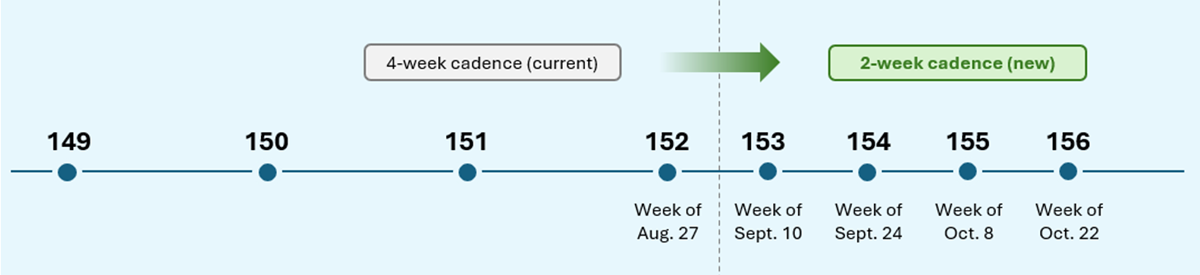
- On the week of August 27, the WebView2 Runtime version 152 will be last major version to be released 4 weeks after the previous version.
- On the week of September 10, version 153 will be the very first version to be released only two weeks after the previous version.
- After that point, a new major version will be released about every two weeks, aligned with the Edge release cadence.
The WebView2 SDK release cadence will also be updated. Instead of the monthly releases, SDK versions will be released when there are new features, bug fixes, security updates, and other improvements to share. When we do ship an SDK, it will be released on the same date as the corresponding Runtime release.
What this means for your app
If you use the Evergreen Runtime distribution mode, which is the default, there’s nothing you need to do. Your users’ machines will start getting security and platform fixes at the more frequent cadence.
If you ship a Fixed Version Runtime instead, you stay in control of when you update, but new major versions arrive more often. Plan to validate and pick up new versions more frequently, so you don’t fall behind on security fixes.
Recommended actions
We recommend that you test your WebView2 app by using the Beta preview channel of Microsoft Edge to catch any bugs before they roll out to your users. Early testing is the best way to catch app-specific issues before they reach Stable. To learn more, see Prerelease testing using preview channels.
We also recommend automating the validation of your app’s core workflows with the WebView2 preview channels. You can automatically test your app by using Microsoft Edge WebDriver. See Automate and test WebView2 apps with Microsoft Edge WebDriver.
Finally, report regressions early so we can address them before the Stable release. You can report bugs by using the WebView2Feedback GitHub repository.
Stay current
Moving with Edge means your users get a safer, more capable web platform sooner, and you get a single, predictable release train to plan around.
We’re grateful for the partnership of the WebView2 developer community, and we’ll keep sharing details as the new cadence rolls out.
To learn more, read our recent announcement, check out our release notes, and review the release schedule. And, as always, feel free to share feedback with us.