

In October 2012, NVIDIA released the GeForce GTX-650Ti GPU which I wrote about at the time of its debut. The GTX-650 GPU lineup offers great performance at a budget price. Today, NVIDIA gives the GTX-650Ti a jolt by offering an updated version of this GPU called the GeForce GTX-650Ti BOOST.
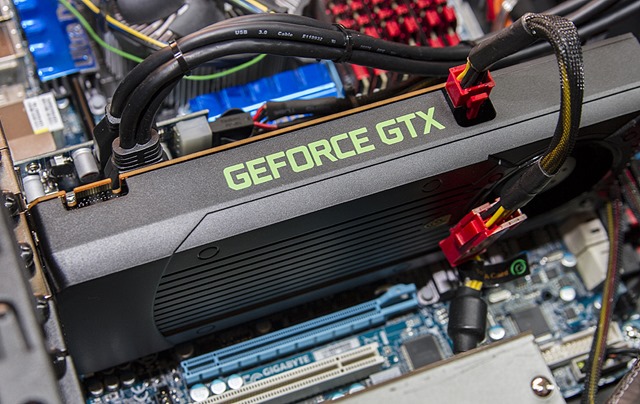
The GeForce GTX-650Ti BOOST reference card installed in my machine
This updated GPU is still available at an economical price, but performance has been enhanced noticeably. At a suggested price of $149.00 for the 1GB configuration and $169.00 for the 2GB configuration, these cards are quite affordable.
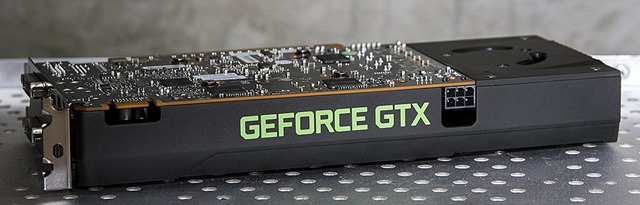
The GeForce GTX-650Ti BOOST is a double-width single slot card
I was fortunate enough to get a card to use prior to the product release so that I could try the card with the latest NVIDIA drivers and DirectX 11 games. My test setup was a Intel Core i7 PC with 24GB RAM and a dual 1920×1200 display setup. The card I used has a great selection of display connections including full-size DisplayPort 1.2 port, full-size HDMI port, and two DVI ports.
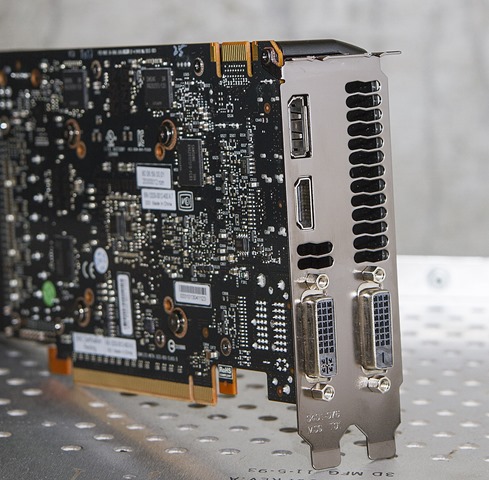
GeForce GTX-650Ti BOOST display connectors
My test card has the larger memory capacity (2GB), and it runs Windows 8 and DirectX 11 games really well.
Here are some specs for the GeForce GTX-650Ti BOOST GPU:
- Architecture: Kepler
- Bus interface: PCIe 3.0
- Memory: 2GB GDDR5 (1GB configuration also available)
- Memory Speed: 6.0 Gbps
- Cuda cores: 768
- Base price: $149.00 (suggested)
- Power connectors: 1 x 6-pin
- 2-way SLI capable
Some notable changes compared to the GeForce GTX-650Ti GPU:
Base Clock:
- 928 MHz (GTX-650Ti)
- 980 MHz – 1033 MHz (GTX-650Ti BOOST)
Memory Interface:
- 128-bit, 5.4 Gbps, 86.4GB/sec memory bandwidth (GTX-650Ti)
- 192-bit, 6.0 Gbps, 144.2GB/sec memory bandwidth (GTX-650Ti BOOST)
SLI Support:
- GTX-650Ti: not supported
- GTX-650Ti BOOST: 2-way supported
With a base price that’s the same as the original GTX-650Ti, the GTX-650Ti BOOST offers better performance without spending extra. With the added ability to run these cards in 2-way SLI mode, you’ll also have the ability to add to your graphics capabilities over time. This incremental approach can help your PC keep up with the ever-increasing demands of new-and-improved DirectX games.
Speaking of DirectX 11 games, I decided to test the GTX-650Ti BOOST by running a couple of the latest DirectX 11 games on my Windows 8 test box, starting with Crysis 3. For these tests, I installed the NVIDIA 314.21 desktop driver package.
Crysis 3 Test
I experimented with a bunch of different combinations in the graphics settings, and settled on “Medium” overall. Since the GTX-650Ti BOOST is optimized for 1080p gaming, I ran the game fullscreen at 1080p resolution.
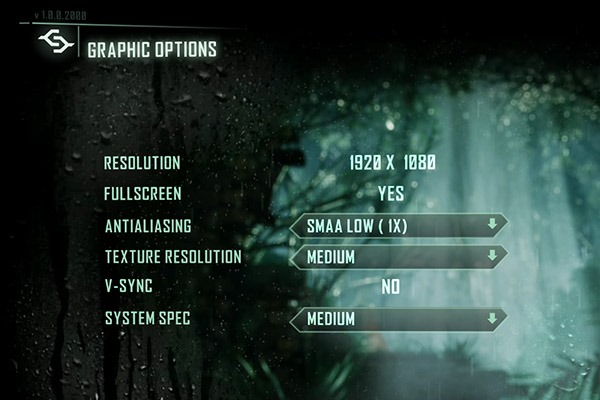
Graphics settings used in Crysis 3 to test the GTX-650Ti BOOST
The resultant gameplay was good, and I was able to hold 40-45 FPS peaking at 55 FPS at 1920×1080, single display, fullscreen. For me, this test validated the performance and value of the GTX-650Ti BOOST GPU since Crysis 3 is a one of the most graphics intense games out there.

Awesome visuals, effects in Crysis 3 as seen running on the GTX-650Ti BOOST – yielding 55 FPS
Battlefield 3 test
After my Crysis 3 test, I thought it would be a good idea to try a game that I’ve found to have great performance on Windows 8: Battlefield 3 (BF3). This game has produced great FPS numbers for me on numerous setups I’ve tested and has impressive graphics/visuals/effects. This time I focused on the sweet-spot for this card: high settings and 1920×1080 full screen mode.
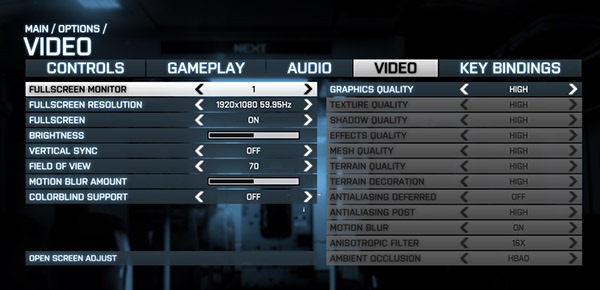
BF3 “High” graphics settings as used to test the GTX-650Ti BOOST
I was expecting great results because BF3 is highly optimized, and I was not disappointed. At “High” settings, BF3 was rock solid at an FPS range of 65-72 during active gameplay. WOW- for a budget-priced card, these are some awesome results!

BF3 Gameplay at High settings at 1920×1080 – an ideal setup for the GTX-650Ti BOOST and Windows 8
As a final test, I cranked BF3 up to “Ultra” settings, and experienced a very playable 45-47 FPS during gameplay. I was really happy with that result.
My only regret with this review was not having enough time to play more great DirectX 11 games. I may just have to do some catch-up on that… It’s a tough job, but someone has to do it!
If you want great graphics performance and have a modest budget, check out the lineup of graphics cards built on the GeForce GTX-650Ti BOOST GPU.
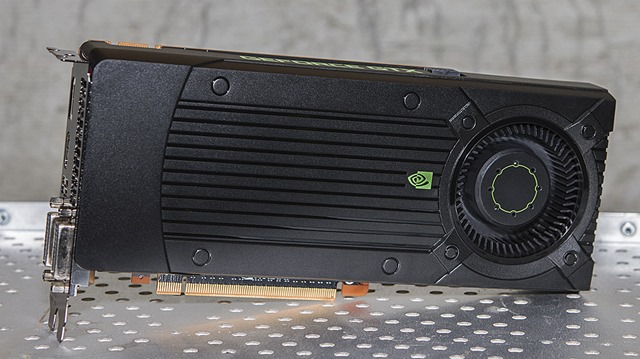
GeForce GTX-650Ti BOOST represents a great value in performance graphics hardware
Stay up to date, follow me on Twitter!